

Introduction: The Luminous Secret Before Prayer
Imagine standing before a rushing river five times a day. Now imagine that each time you enter it, all the grime, the stress, and the spiritual heaviness of the day simply melts away. This is not a fantasy—it is the profound reality of How To Do Wudu (Ablution). In the hustle of modern life, we often forget that Islam provides us with a spiritual filtration system. Before you raise your hands to your ears and say “Allahu Akbar,” you must first prepare your soul to stand before the Creator of the Universe.
For students of QuranFocus.com, learning the physical actions of prayer is just the beginning. Understanding the ritual of Wudu—its steps, its secrets, and its transformative power—is the key to unlocking a deeper connection in your Salah. This guide is designed to walk you through the Steps for Making Wudu with clarity, authenticity, and spiritual insight.
What is Wudu? The Meaning Behind the Moisture
Linguistically, the Arabic word Wudu (وضوء) originates from the root word wadha’ah, which means beauty and brilliance . It is not merely about washing away dirt; it is about bringing a divine glow to the limbs you are about to use in worship. When you perform Wudu, you are polishing the vessel of your soul to make it ready to receive the mercy of Allah.
Allah commands this sacred act directly in the Quran:
“O you who have believed, when you rise to [perform] prayer, wash your faces and your forearms to the elbows and wipe over your heads and wash your feet to the ankles…” [Quran 5:6] .
This verse establishes the foundation. It is a divine invitation to purify yourself physically so that you can be present spiritually.
The Essential Steps: How To Do Wudu (Ablution)
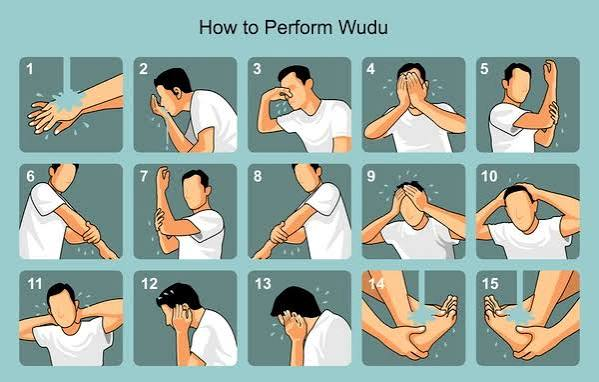
Performing Wudu is a beautiful, rhythmic sequence. According to the Sunnah of the Prophet Muhammad (peace be upon him), here is the precise method. Before beginning, ensure you are using clean, pure water .
1. The Intention (Niyyah) and Starting with the Name of Allah
The heart is the center of all actions. In your heart, intend to perform Wudu to purify yourself for the sake of Allah. Then, verbally say “Bismillah” (In the name of Allah) . This simple phrase reframes the act from a mundane habit into an act of worship.
2. Washing the Hands
Begin by washing both of your hands up to the wrists three times. Use your right hand to wash the left and vice versa. Ensure that no part of the skin, including between the fingers, is left dry. This act symbolizes asking Allah to keep your hands away from wrongdoing .
3. Rinsing the Mouth (Madmadah)
Take a handful of water with your right hand and rinse your mouth thoroughly three times. Swirl the water around your teeth and gums. If you are fasting, be careful not to swallow the water .
4. Cleansing the Nose (Istinshaq)
Using your right hand, sniff a small amount of water into your nostrils and then blow it out with your left hand. Do this three times. This clears the passageway for breath, symbolizing the cleansing of the path for your soul .
5. Washing the Face
Wash your entire face three times, from the hairline at the top of your forehead down to the bottom of your chin, and from ear to ear. A man should wash the hair of his beard. This is a crucial step, as the face is the mirror of the soul .
6. Washing the Arms
Wash your right arm up to and including the elbow three times. Then, repeat the process for your left arm. Run your fingers through each other to ensure no dry spots remain. The elbow is a hinge; washing it reminds us to be flexible in our servitude to Allah .
7. Wiping the Head (Mas’h)
This step is different; it is not washing, but wiping. Using wet hands, pass your fingers from the front of your head to the back, and then bring them back to the front. This action is done once .
8. Cleaning the Ears
With the same water used for the head, use your index fingers to clean the inside of your ears and your thumbs to wipe the back of your ears. Do this once .
9. Washing the Feet
Finally, wash your right foot up to and including the ankle three times, ensuring water reaches between the toes. Then, wash your left foot in the same manner. This is the final physical step of your purification .
10. The Closing Supplication (Dua)
After completing the Wudu, it is a highly recommended Sunnah to recite the Shahadah (testimony of faith) and the following supplication:
“Ash-hadu alla ilaha illa Allah, wahdahu la sharika lah, wa ash-hadu anna Muhammadan abduhu wa rasuluh. Allahumma ij’alni minat-tawwabin, waj’alni minal-mutatahhirin.”
(I bear witness that there is no deity worthy of worship except Allah alone, with no partner, and I bear witness that Muhammad is His servant and messenger. O Allah, make me among those who repent and make me among those who purify themselves.)
The Hidden Rewards: Why Purity Matters
Why go through this routine five times a day? The Prophet Muhammad (peace be upon him) revealed that on the Day of Judgment, his Ummah (nation) will be called with luminous faces, hands, and feet due to the traces of their Wudu .
It is narrated that when a Muslim performs Wudu, the sins committed by their eyes, hands, and feet fall away with the water. Even the sins under the nails are washed away . This is not just a physical cleanse; it is a spiritual reset button. For a student at QuranFocus.com, this means that when you sit down to memorize Quran or learn Tajweed, you are doing so in a state of physical and spiritual brilliance.
Things That Invalidate Your Wudu
To maintain this state of purity, one must be aware of what breaks it. According to Islamic jurisprudence, your Wudu is invalidated by:
- Any discharge from the front or back passage (urine, stool, wind) .
- Deep sleep where you lose consciousness of your surroundings .
- Loss of mind due to insanity, intoxication, or fainting .
- Touching the private parts with the bare hand (according to some schools of thought) .
If any of these occur, you must renew your Wudu before you can pray, touch the Quran, or perform Tawaf.
Frequently Asked Questions
Can I perform Wudu with nail polish?
Standard polish prevents water from reaching the nail. Some scholars permit water-permeable polish, but the safest approach for a valid Wudu is to remove it or seek specific guidance from a qualified scholar.
What if I have a cut or bandage?
You can wipe over a bandage with wet hands if washing the wound would cause harm or delay healing.
Is Wudu required for reading Quran on a phone?
While many scholars recommend Wudu for handling the Quran app, the general ruling for touching the physical book is strict. However, it is always a sign of reverence to perform Wudu before reciting, even from a screen.
Conclusion: Elevate Your Learning with QuranFocus
Learning How To Do Wudu (Ablution) is a lifetime journey of perfecting your connection with Allah. It is the foundation upon which your Salah is built. At QuranFocus.com, we believe that understanding the why behind the how is what transforms a beginner into a devoted learner.
Ready to transform your prayer and Quran recitation? If you want to master the Steps for Making Wudu and perfect your Salah with expert guidance from certified scholars, join QuranFocus.com today. Our online Quran academy offers one-on-one sessions with male and female teachers, ensuring you learn these essential Islamic principles with clarity, confidence, and spiritual excellence. Let us help you build that luminous connection, one drop of water at a time.