

Introduction: The Sacred Audience
Imagine standing before the King of Kings, not once, but five times a day. For every Muslim man, this is not just a metaphor—it is the reality of Salah. Learning How to Perform Salah For Men is more than memorizing movements; it is mastering the art of conversing with your Creator. In a world filled with constant distraction and noise, Salah is the anchor that grounds your soul and the sanctuary where you leave the chaos behind. At QuranFocus.com, we understand that perfecting your prayer is a journey of a lifetime. This Namaz Step by Step guide will walk you through the precise method of Islamic prayer as established by the Prophet Muhammad (peace be upon him), ensuring your worship is both valid and deeply transformative.
Preparing for Prayer: The Pre-Requisites
Before you raise your hands for the opening Takbir, certain conditions must be met. The Prophet (peace be upon him) said: “The prayer of a person who does not perform ablution is invalid.”
Essential Checklist:
- Purity (Wudu): Ensure you have performed ablution. For a detailed guide, refer to our article on How To Do Wudu (Ablution) .
- Clean Clothing & Place: Your body, garments, and prayer area must be free from impurities.
- Covering the Awrah: For men, the minimum is from the navel to the knee, though covering the shoulders is highly recommended .
- Facing the Qiblah: Stand facing the direction of the Kaaba in Mecca.
- Niyyah (Intention): Form the intention in your heart for the specific prayer you are about to perform .
The Opening of Salah: Takbir and Qiyam
The prayer begins with a declaration of Allah’s supremacy. This initial moment sets the tone for your entire worship.
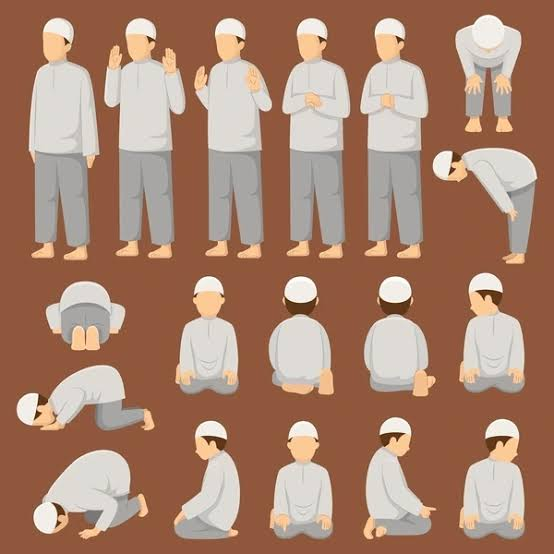
Step 1: The Opening Takbir (Takbirat al-Ihram)
Stand upright, with your feet parallel and toes pointing toward the Qiblah. Raise both hands to your earlobes, ensuring your palms face the Qiblah, and say:
“Allahu Akbar” (Allah is the Greatest)
This action marks the formal beginning of the prayer. You are now in a state of sacred communication .
Step 2: The Standing Posture (Qiyam)
After the Takbir, fold your hands below your navel. According to the Hanafi school, place the palm of your right hand over the back of your left hand, gripping the wrist with your right thumb and little finger, while the three middle fingers lie flat on the forearm .
Fix your gaze on the spot where your forehead will rest in prostration .
Recitations in Qiyam:
- Opening Supplication (Thana):
“Subhanaka Allahumma wa bihamdika, wa tabarakasmuka, wa ta’ala jadduka, wa la ilaha ghayruk.”
(Glory be to You, O Allah, and praise be to You. Blessed is Your Name, and exalted is Your Majesty. There is no deity besides You.) - Seeking Refuge:
“A’udhu billahi min ash-shaytan ir-rajim.” (I seek refuge in Allah from Satan, the accursed.) - Surah Al-Fatihah: Recite the opening chapter of the Quran completely. This is obligatory in every unit (rak’ah) of prayer . After completing it, softly say “Ameen” .
- Additional Recitation: In the first two rak’ahs of the obligatory prayer, and in every rak’ah of voluntary prayers, recite a short surah or at least three verses from the Quran .
The Physical Postures: Ruku and Sujud
The prayer now moves through a series of divinely prescribed movements that embody submission and glorification.
Step 3: The Bowing (Ruku)
Saying “Allahu Akbar”, bow at your waist. According to the Sunnah for men:
- Place both hands firmly on your knees with fingers spread apart.
- Keep your back and head in a straight line—do not drop your head lower than your back or raise it above.
- Keep your elbows away from your sides, separate from your body.
- Keep your gaze fixed on your toes .
Recitation in Ruku (at least three times):
“Subhana Rabbiyal-Adheem” (Glory be to my Lord, the Most Great)
Step 4: Rising from Ruku (Qawmah)
Rise from the bowing position saying:
“Sami’ Allahu liman hamidah” (Allah hears the one who praises Him)
Then, standing straight and still, say:
“Rabbana lakal-Hamd” (Our Lord, to You belongs all praise)
It is crucial to stand upright and motionless for a moment. If you fail to do so, your prayer may be invalid .
Step 5: The Prostration (Sujud)
Saying “Allahu Akbar”, descend into prostration. The correct sequence for going down is: knees first, then hands, then nose, then forehead .
In Sujud, seven body parts must touch the ground:
Additional Sunnah for Men:
- Separate your stomach from your thighs.
- Keep your elbows raised off the ground and away from your sides .
- Point your toes toward the Qiblah.
- Keep your gaze on the tip of your nose.
Recitation in Sujud (at least three times):
“Subhana Rabbiyal-A’la” (Glory be to my Lord, the Most High)
Step 6: Sitting Between Prostrations (Jalsa)
Saying “Allahu Akbar”, rise from prostration and sit briefly. For men, the Sunnah is to sit on your left foot while keeping your right foot upright, with toes pointing toward the Qiblah .
Recitation:
“Rabbighfir li, warhamni, wajburni, warfa’ni, warzuqni, wahdini, wa ‘afini, wa’fu ‘anni.”
(O Lord, forgive me, have mercy on me, support me, elevate me, provide for me, guide me, grant me health, and pardon me.)
Step 7: The Second Prostration
Perform a second prostration exactly as the first, with the same recitation. This completes one full rak’ah .
Completing the Prayer: Tashahhud and Salam
If you are praying a two-rak’ah prayer, after the second prostration of the second rak’ah, you sit for the final Tashahhud. For prayers of three or four rak’ahs, you stand up after the second prostration of the second rak’ah to complete the remaining units.
Step 8: The Tashahhud (Sitting Testimony)
Sit in the position described in Jalsa (on your left foot, right foot upright). Place your hands on your thighs. When you reach the point of the Shahadah, raise the index finger of your right hand and lower it when affirming Allah’s oneness .
Recitation:
“At-Tahiyyatu lillahi was-salawatu wat-tayyibatu. As-Salamu ‘alayka ayyuhan-Nabiyyu wa rahmatullahi wa barakatuh. As-Salamu ‘alayna wa ‘ala ‘ibadillahis-salihin. Ash-hadu an la ilaha illallah, wa ash-hadu anna Muhammadan ‘abduhu wa rasuluh.”
(All greetings are for Allah, and all prayers and good things. Peace be upon you, O Prophet, and the mercy of Allah and His blessings. Peace be upon us and upon the righteous servants of Allah. I bear witness that there is no deity except Allah, and I bear witness that Muhammad is His servant and messenger.)
Step 9: Durood and Final Supplication
After Tashahhud, recite the Durood Ibrahim:
“Allahumma salli ‘ala Muhammad, wa ‘ala ali Muhammad, kama sallayta ‘ala Ibrahim, wa ‘ala ali Ibrahim, innaka hamidun majid. Allahumma barik ‘ala Muhammad, wa ‘ala ali Muhammad, kama barakta ‘ala Ibrahim, wa ‘ala ali Ibrahim, innaka hamidun majid.”
Then, recite the supplication:
“Allahumma inni zalamtu nafsi zulman kathiran, wa la yaghfirudh-dhunuba illa anta, faghfir li maghfiratan min ‘indika warhamni, innaka antal-Ghafurur-Rahim.”
Step 10: The Closing Salam
Turn your head to the right and say:
“Assalamu ‘alaykum wa rahmatullah”
Then turn your head to the left and repeat:
“Assalamu ‘alaykum wa rahmatullah”
Common Mistakes Men Make in Salah
Even seasoned worshippers can fall into errors. Here are a few to avoid:
- Letting Garments Overlap the Ankles: It is Makrooh Tahrimi (prohibitively disliked) for men to perform Salah with clothing hanging below the ankles .
- Rushing the Movements: Each posture must be held long enough to recite the required Tasbih at least once. Rushing nullifies the tranquility (khushu) of prayer.
- Not Standing Still in Qawmah: As mentioned, a brief pause upon rising from Ruku is obligatory .
- Forgetting the Intention: While verbal intention is recommended, the intention in the heart is the foundation. Without it, the prayer is merely exercise.
Conclusion: Elevate Your Prayer with QuranFocus
Learning How to Perform Salah For Men is a sacred obligation that opens the door to divine connection. Every posture, from the humble prostration to the final Salam, is a conversation with your Creator. At QuranFocus.com, we are dedicated to helping you perfect your prayer and deepen your relationship with Allah.
Ready to take your worship to the next level? If you want to master Namaz Step by Step with personalized guidance from certified male instructors, join QuranFocus.com today. Our online Quran academy offers one-on-one sessions tailored to your pace and schedule. Let us help you transform your Salah from a routine into a radiant spiritual experience. Enroll now and begin your journey toward prayer perfection.